Balconette bras: lift without covering the top of the breast


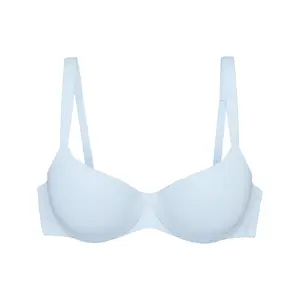


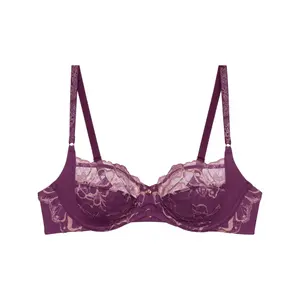


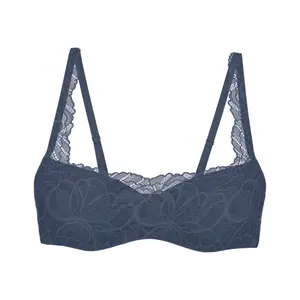

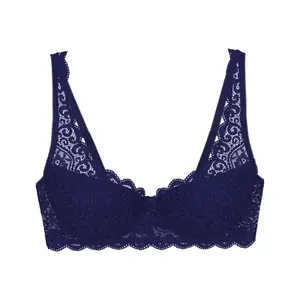


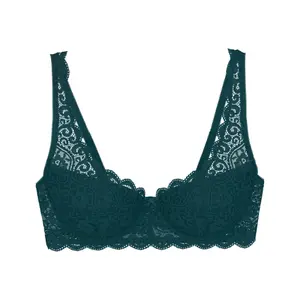


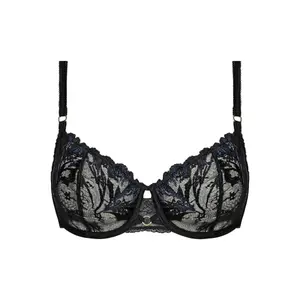
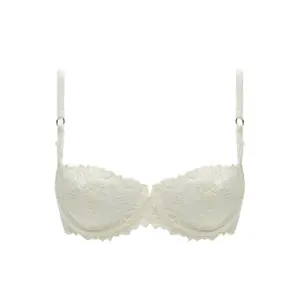
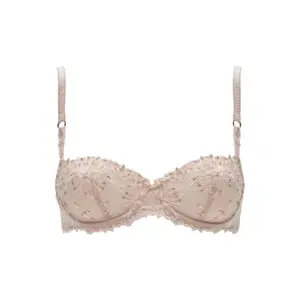

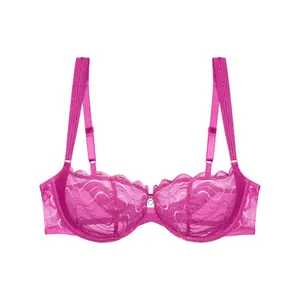


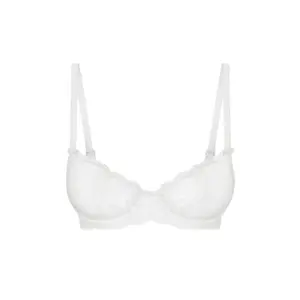


Lace, microfiber or satin balconette bra, with or without padding, featuring wide-set or removable straps: the style that enhances the upper breast and can be worn under a square or boat neckline.
A balcony bra is recognized by its cups cut almost horizontally, covering only the lower half of the breast, and its straps placed very wide apart, near the arms. This design lifts the bust from below and leaves the top of the neckline clear, creating a rounded line without the projecting effect of a push-up.
Balcony bra, plunge or demi-cup: what separates them
The three look similar and sellers often confuse them. The balcony bra has the most horizontal cut and the widest straps. The plunge covers a bit higher and its straps are closer together, making it more stable for everyday wear. The demi-cup, even more revealing than the balcony, is reserved for very low-cut outfits. A balcony push-up bra adds a padding under the cup to bring the bust closer together. Between a balcony or plunge bra, the first clearly exposes the top of the breast more. And the larger size balcony bra is now available up to size G at specialist shops. In practice, if you're looking for a wearable shape every day under a t-shirt, the plunge is a safer choice; if you're dressing a square neckline, the balcony bra is made for that.
Who suits the balcony bra
It is particularly suitable for busts where the volume is distributed downwards, which it effectively lifts, and for medium cups looking for shape without padding. It is less suitable for very forward-projected breasts that overflow from the short cup, and for narrow shoulders, where the wide-set straps tend to slip. In this latter case, a convertible strap model resolves the issue.
What to wear over a balcony bra
Its low cut makes it invisible under a square neckline, boat neck or wide neckline, where a classic bra would show. It also works under an unbuttoned shirt, revealing lace rather than a cup edge. However, under a high round collar, its benefit disappears: it’s better to go for a full-coverage bra, which is more stable.